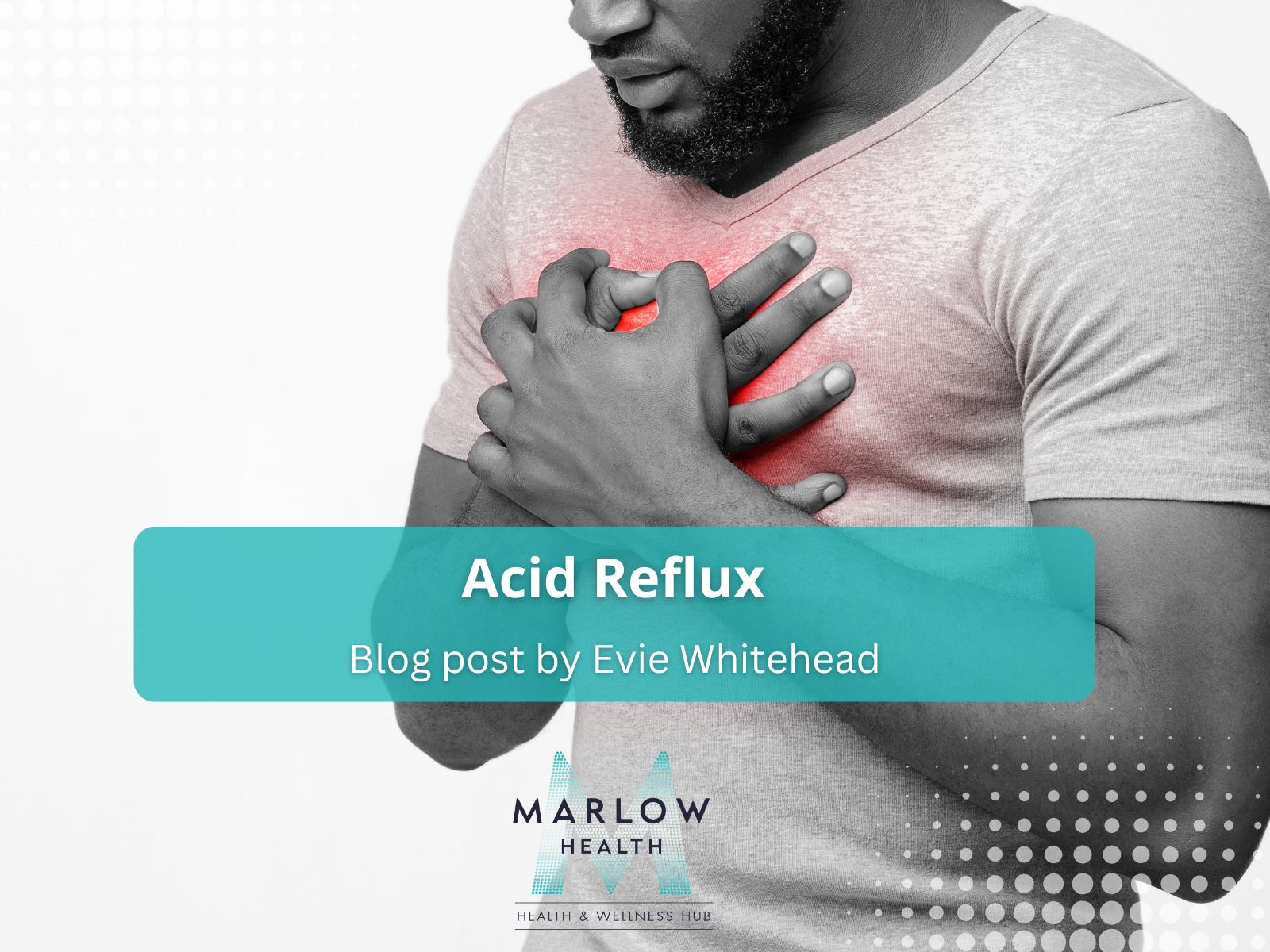
If you suffer from acid reflux or heartburn, you’ve probably been told some version of this story: “Your stomach makes too much acid. Take this medication and avoid the usual trigger foods.”
For many people, that advice leads to years, sometimes decades of taking antacids or PPIs (proton pump inhibitors) with underlying, ongoing symptoms, food fear, and a quiet sense that something still isn’t right.
You’d be right to question it. You know your gut and your body better than anybody else and your gut feeling is usually right even if you are not sure how to fix it.
From a functional medicine perspective, reflux isn’t a diagnosis – it’s a signal. A message from the body that digestion isn’t working as it should.
Heartburn Is Not Always Caused by “Too Much Stomach Acid”
This may surprise you, but many people with reflux symptoms can have low stomach acid, and on top of that, stomach acid is only one piece of the puzzle. I would rather re-frame the whole “high” and “low” stomach acid conundrum as “inappropriate and/or unpredictable acid secretion”.
Stomach acid plays a vital role in:
- Breaking down protein
- Activating digestive enzymes
- Absorbing key nutrients (iron, B12, magnesium, zinc)
- Killing unwanted bacteria entering with food
When stomach acid is insufficient, food doesn’t break down properly which can lead to:
- Delayed stomach emptying
- Increased pressure in the stomach
- Fermentation and gas production
- Relaxation or dysfunction of the lower oesophageal sphincter (LOS)
The result? Acid — even small amounts — ends up where it shouldn’t be, causing that familiar burning sensation. This is clearly not good for you to have burning acid in the delicate throat where it can damage the cells and in some cases lead to Barretts Oesphagus, a pre-cancerous state where PPI medication is a long-term necessity to protect you.
Suppressing acid may reduce symptoms short-term, but it doesn’t address why digestion is struggling in the first place.
Reflux Is a Whole-Digestive-System Issue
In my approach to this condition, I don’t look at the gut in isolation. I assess digestion from “North to South”, because each stage relies on the one before it. Think of digestion like a set of dominoes – the first one set’s off the next in sequence. I find this often resolves 8/10 cases naturally with my clients.
Reflux can be influenced by:
- Poor chewing and rushed eating
- Chronic stress and nervous system imbalance
- Impaired stomach acid or poor enzyme production
- Gut microbiome imbalances (dysbiosis)
- Small intestinal bacterial overgrowth (SIBO)
- Bile flow and liver function
- Food sensitivities or intolerances
If one part of the digestive chain is underperforming, the whole system compensates often creating symptoms higher up, like reflux.
This is why eliminating coffee; tomatoes or spicy foods alone rarely solves the problem long-term.
The Nervous System: The Missing Piece in Reflux
Digestion is not just chemical — it’s neurological.
Your digestive system is controlled by the parasympathetic (“rest and digest”) nervous system. When you’re stressed, busy, eating on the go, or living in constant fight-or-flight mode, the sympathetic nervous system takes over and shuts down digestion as one of the first things to be down-regulated. This all happens below your conscious detection and can lead to a lot of confusion over what you should or shouldn’t eat leading to over-restriction making things worse in the long run.
Nuerological affects:
- Stomach acid production
- Enzyme release
- Gut motility
- Sphincter tone
Many clients are doing everything “right” with food — yet their symptoms persist because the nervous system has never been addressed.
Long-Term PPI Use: What’s Often Missed in the Conversation
PPIs can absolutely be helpful and necessary in certain situations. However, they are frequently prescribed without a clear exit strategy, even when symptoms are functional rather than structural.
Long-term acid suppression has been associated with:
- Nutrient deficiencies (B12, iron, magnesium, calcium)
- Altered gut microbiome
- Increased infection risk
- Worsening digestion over time
This is why I’ve undertaken additional accreditation to support people (with their GP’s involvement) who want to safely reduce or come off PPIs where appropriate, while addressing the underlying causes of their reflux.
This is never about stopping medication abruptly or going against medical advice. It’s about restoring digestive function so medication may no longer be the only option.
Why a Root-Cause Approach Is Different
Instead of asking: “What can I take to stop the burn?” I would ask: “Why is this happening in the first place?”
That means exploring:
- Your symptom pattern and history
- Eating timings and habits
- Digestive capacity and function
- Stress load and nervous system health
- Diet and digestion (not the same thing)
- Microbiome balance
- Nutrient status
When digestion is supported properly, many people find their symptoms reduce naturally often without needing to avoid endless foods or rely on long-term medication.
You Don’t Have to “Live With” Reflux
Heartburn and reflux may be common, but they are not normal and are signs your digestive system needs more support.
If you’re tired of:
- Managing symptoms instead of resolving them completely
- Being told everything is “fine” when it doesn’t feel that way
- Feeling dependent on medication without answers
- Restricting food groups hoping to feel better
Then a functional, root-cause approach may be exactly what’s been missing.
Ready to Explore What’s Driving Your Symptoms?
I offer no-pressure discovery calls to explore whether we’re a good fit to work together and to help you understand what may be contributing to your reflux without obligation or quick fixes.
👉 Book your discovery call here
Your digestion is designed to work. Sometimes it just needs the right support, in the right order.
Evie